

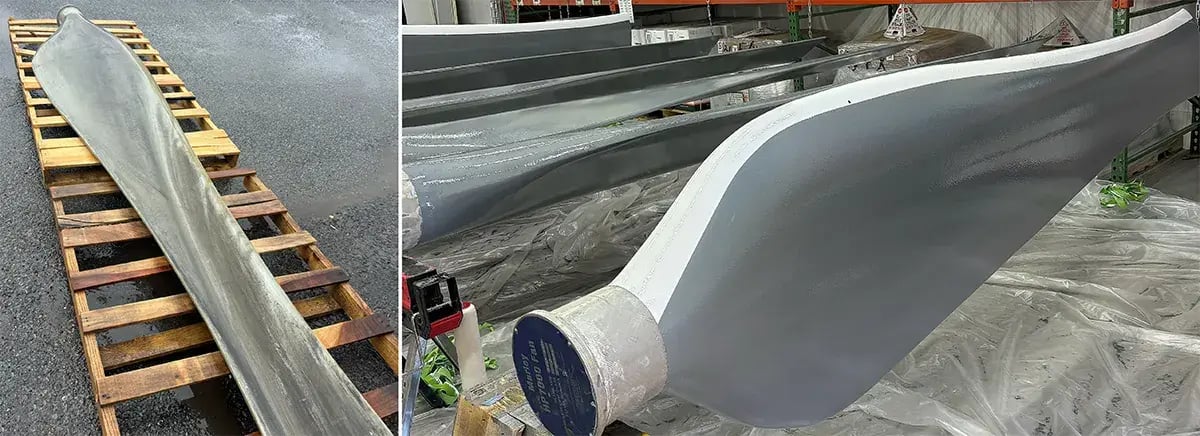
Refurbishment Recovers Value from Worn Cooling Tower Fan Blades
Job Location:
A 725-megawatt combined-cycle power plant in coastal New Jersey during a planned maintenance outage.
Customer Need:
Determine whether removed cooling tower fan blades remained suitable for refurbishment and continued service before deciding between repair and replacement.
Customer Challenge:
Years of gray-water operation caused leading-edge erosion and coating deterioration, requiring an on-site condition assessment to determine whether the blades remained structurally suitable for refurbishment.
Operational Impact:
Without a technical assessment, structurally sound blades could have been unnecessarily discarded, increasing lifecycle costs and missing an opportunity to preserve valuable emergency spare equipment.
BIG Solution: Following an On-Site Condition Assessment, Fan Blades Were Restored and Retained as a Cost-Effective Emergency Spare Set
Facility Overview
The facility operates a 725-megawatt combined-cycle natural gas power plant utilizing a 14-cell mechanical draft cooling tower supplied with reclaimed gray water. Each cooling tower cell uses a 28-foot diameter, nine-blade fan to move large volumes of air through the tower and maintain condenser efficiency.
Gray-water operation conserves freshwater but creates a harsher operating environment. Suspended solids, treatment chemicals, dissolved minerals, and constant moisture accelerate erosion and weathering of exposed fan blade surfaces.
Maintenance Challenge
Cooling tower fan blades gradually lose their aerodynamic profile as leading edges erode and protective coatings deteriorate. While the damage often begins as surface wear, continued exposure can reduce airflow efficiency, increase vibration, and accelerate corrosion.
For power plants, declining cooling tower performance can reduce condenser efficiency and increase operating costs. If deterioration progresses unchecked, facilities may face unplanned outages or expensive blade replacement.
The challenge is determining when refurbishment remains practical and when replacement becomes necessary.
Why It Matters
Many cooling tower fan blades remain structurally sound long after surface deterioration becomes visible. Evaluating the actual condition of the blade—not simply its appearance—can identify opportunities to safely extend service life while avoiding unnecessary replacement costs.
Assessment & Repair Strategy
As part of a planned maintenance outage, BIG evaluated the removed cooling tower fan blades at the power plant to determine whether refurbishment could safely return them to continued service.
The on-site assessment confirmed that deterioration was primarily limited to leading-edge erosion, localized surface wear, and coating loss caused by years of gray-water operation. Importantly, the underlying blade structure remained intact, indicating that refurbishment remained a practical option.
Based on these findings, BIG recommended restoring the blades using Belzona 5821 to rebuild localized erosion and Belzona 5111 Ceramic Cladding to provide long-term protection against moisture impingement, corrosion, UV exposure, and weathering.
Following the field assessment, the blades were transported to the BIG / Repair Technology service facility, where the recommended refurbishment was completed.
Results
The project delivered value beyond restoring the physical condition of the fan blades.
BIG's on-site assessment provided the customer with the technical information needed to make an informed repair-versus-replacement decision based on actual blade condition rather than appearance.
Although the plant ultimately chose to install new blades during the outage, the evaluation confirmed that the removed blades remained suitable for refurbishment. Once restored at the BIG / Repair Technology facility, they were retained as an emergency spare set, preserving the remaining value of existing assets while improving future outage preparedness.
The project demonstrates how condition-based assessment can support better maintenance decisions, improve asset utilization, and reduce lifecycle costs.
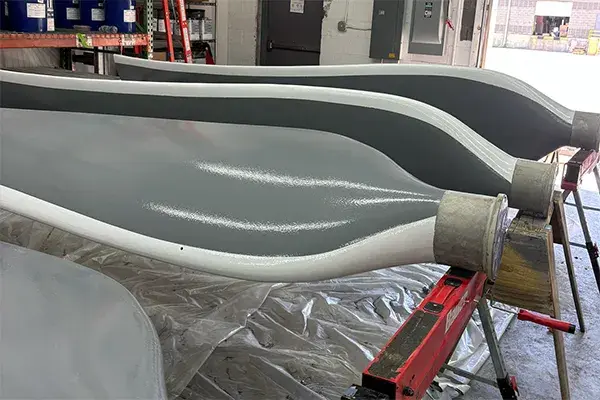
Removed cooling tower fan blades refurbished with Belzona protective coating systems at the BIG / Repair Technology service facility.
Engineering Insight
The objective of industrial maintenance is not to perform the largest repair possible—it is to perform the right repair. Matching the repair strategy to the actual condition of the asset often delivers the greatest long-term value.
Could Refurbishment Be an Option?
Cooling tower fan blade refurbishment may be appropriate when:
- Structural integrity remains intact
- Damage is limited to leading-edge erosion or surface deterioration
- Planned outages allow off-site restoration
- Replacement lead times are lengthy
- Preserving emergency spare inventory provides operational value
Replacement should be considered when blades exhibit significant structural damage, severe delamination, compromised attachment points, or deterioration beyond practical restoration.
Customer Benefits
- Extended service life
- Deferred replacement costs
- Improved outage readiness
- Preserved emergency spare inventory
- Reduced procurement risk
- Long-term protection against erosion and corrosion
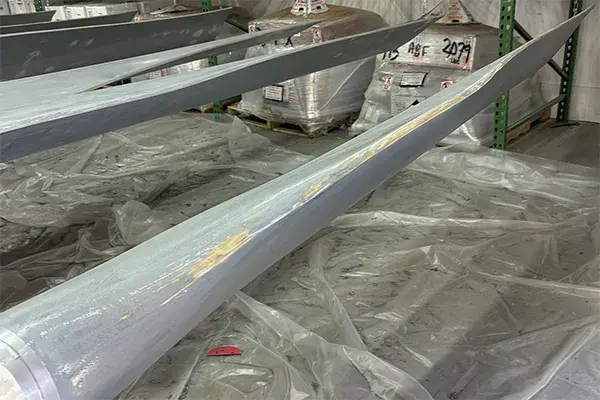
Evaluation confirmed that leading-edge erosion could be restored before application of the Belzona protective coating system.
Maintenance Takeaway
Cooling tower fan blades should not be replaced based on appearance alone. A thorough condition assessment can identify opportunities to restore serviceable components, extend asset life, and reduce lifecycle costs while maintaining reliable plant operation.
Step-By-Step Cooling Tower Fan Blade Restoration
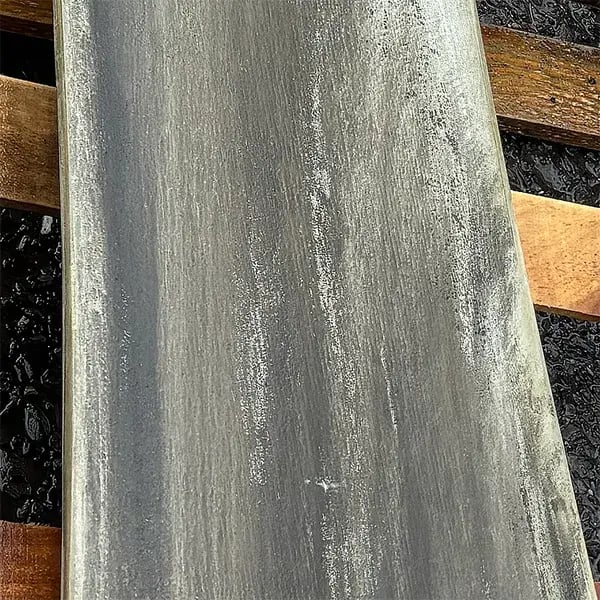
Surface deterioration from years of exposure to gray water, treatment chemicals, and suspended solids.
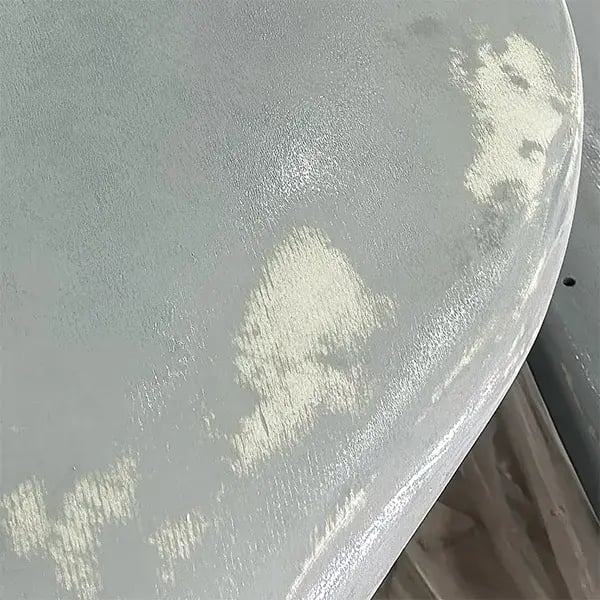
Close-up of fan blade showing protective coating erosion that exposed the fiberglass-reinforced vinyl ester substrate.
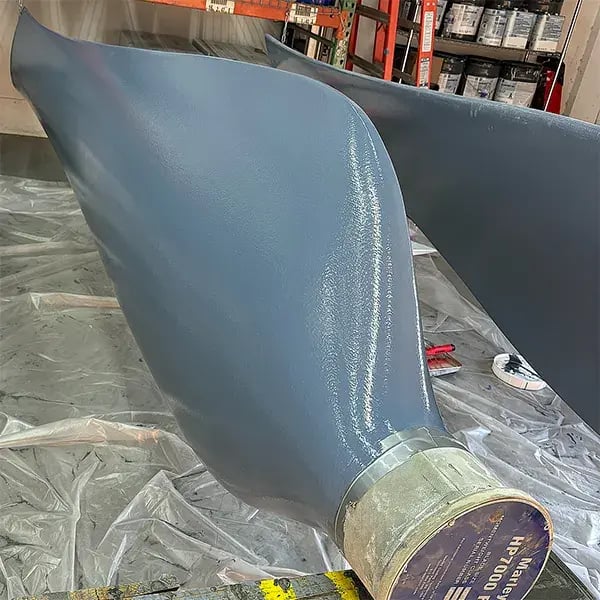
First coat of Belzona 5821 applied to restore the blade surface and provide long-term environmental protection.
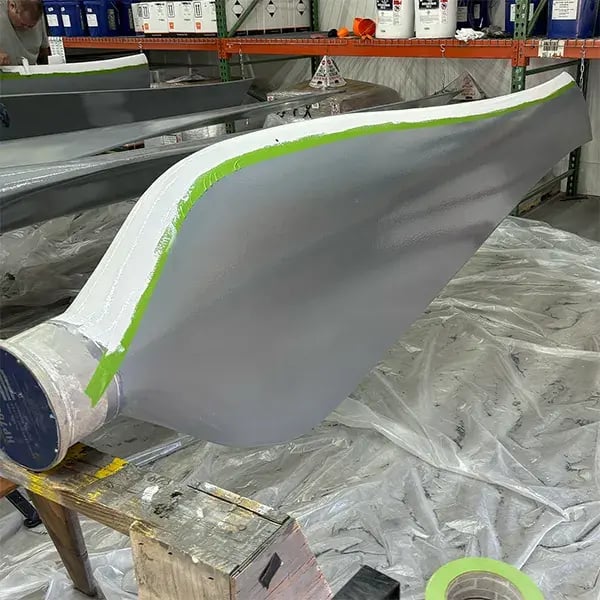
Belzona 5111 Ceramic Cladding is applied to the fan blade leading edge to provide enhanced erosion, abrasion, and chemical resistance in the highest-wear area.
For more information about our cooling tower fan blade restoration service, and other industrial solutions, please contact the Banks Industrial Group team today via email or by calling 856-687-2227.